
Coastal · Updated 30 September 2026 · 5 min read
Salt Air and Your Roof: How the Sunshine Coast Eats Metal and Fades Tiles
How salt air corrodes valleys, gutters and Colorbond and UV fades tiles on Sunshine Coast roofs, which suburbs sit in the harshest zones, and what helps.
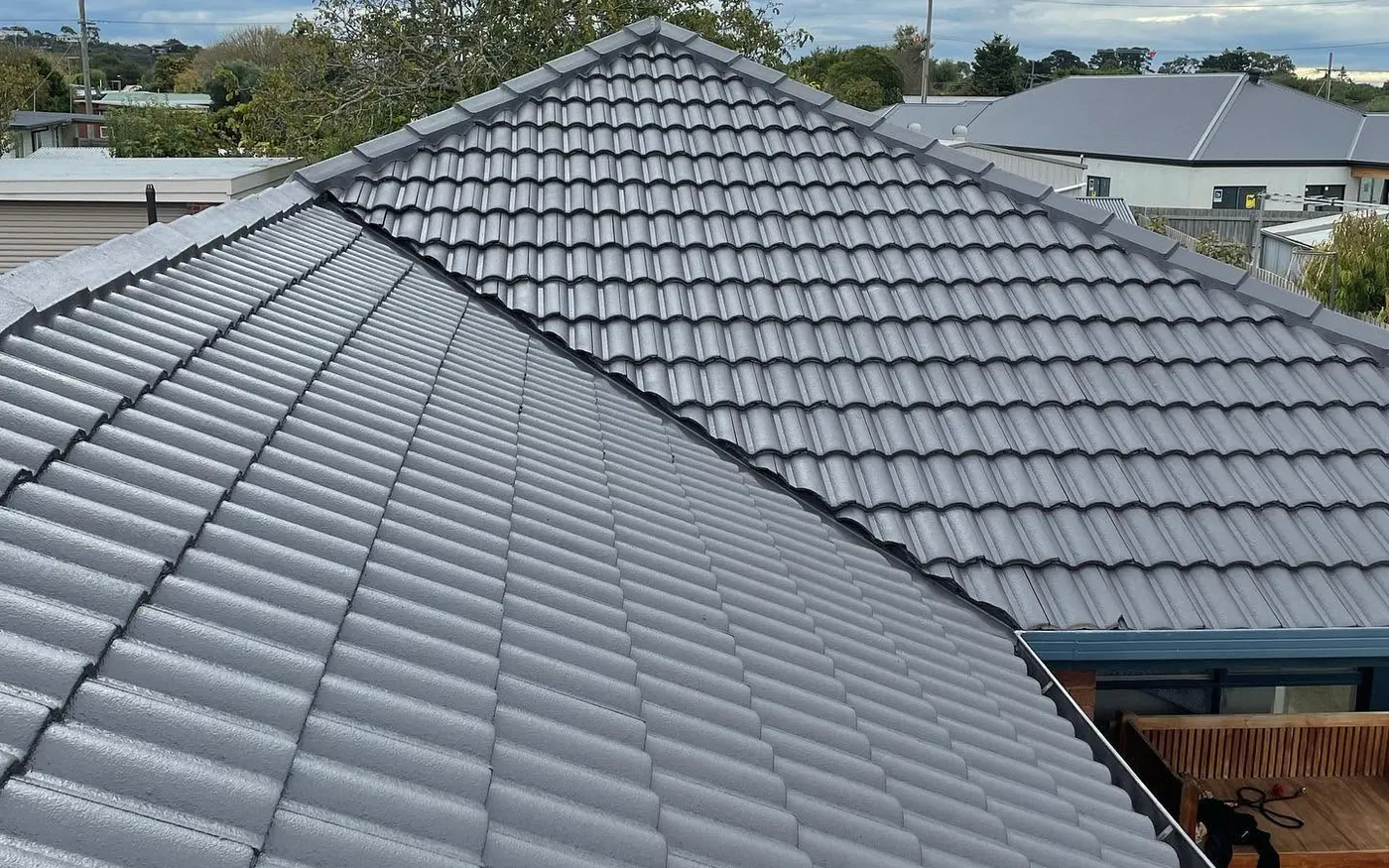
- Within 200 m of a surf beach a roof sits in the harshest corrosion band, C5. The effect fades with distance but can reach far inland on prevailing winds.
- Salt attacks metal first: valley irons, gutters, screws, flashings and Colorbond sheets.
- Sun does the rest, fading the coating on concrete tiles over 15 to 25 years.
- More frequent cleaning and a membrane coating are the two things that slow it down.
How salt gets onto your roof
Surf throws salt into the air as fine spray, and the sea breeze carries it inland. Every roof between the beach and the range collects some of it. How much depends on distance from the water, and the AS 4312 corrosivity guide breaks that into bands: C5 within 200 m of a surf beach, C4 from 200 m to 1 km, and C3 from 1 km to 10 km. With prevailing onshore winds the C3 band can extend as far as 50 km inland, which takes in most of the hinterland.
The salt does not wash off in the rain the way you might expect. It settles into gutter seams, under tile laps, around screw heads and along valley irons, where it stays damp long after the roof surface has dried. Damp salt is what drives corrosion, so the parts of a roof that hold water are the parts that fail first.
Sun adds to it. The Sunshine Coast gets a mean maximum of 29.1 degrees in January at the airport, and Cancer Council Queensland notes that skin can burn in 10 to 15 minutes on a summer day. The same UV works on roof coatings every day of the year.
What salt does to metal
Metal goes first. On a tiled roof, that means the valley irons, the flashings around chimneys and vents, the gutter and downpipe joints, and the screws and clips that hold everything in place. On a Colorbond roof it means the sheet itself, starting at cut edges, overlaps and around every fastener. You see it as white powder, then orange staining, then pitting, and then holes.
Valley irons are the common failure on Sunshine Coast tile roofs. They sit low, carry the most water and hold debris, so they stay wet. A rusted valley leaks under the tiles where nobody sees it until a ceiling stains. Replacing a valley iron is a normal part of roof repairs and of every roof restoration we do near the beach.
Gutters and fascia go the same way. Rusted gutter seams drip against the fascia board, the fascia rots, and the gutter drops. Published Sunshine Coast guides put gutter replacement at $39 to $105 per metre, so catching it early with a clean and a coat through our gutter and fascia painting service is the cheaper path. For metal roofs with surface rust but sound sheets, metal roof restoration cleans, treats and coats them before holes form.
What sun and salt do to tiles
Tiles do not rust, but their surface still fails. Concrete tiles get their colour from a coating applied at the factory, and that coating fades under Australian UV over 15 to 25 years. As it breaks down the surface goes chalky, then porous. Porous tiles hold water, grow moss and lichen, and the same source notes that lichen acids eat what is left of the coating. Salt speeds the cycle because a salty, damp surface is what lichen likes.
The tile underneath outlasts its coating by a wide margin. Concrete tile bodies last 30 to 50 years or more, and terracotta 50 to 100 or more. Terracotta is fired clay with the colour through the body, so it holds its colour better on the beachfront, but the mortar on its ridges cracks just the same.
That is why a coastal tile roof is usually a restoration job rather than a replacement. The fix is to clean off the growth and the chalk, replace any cracked tiles, re-point the ridges and put a new membrane over the lot. Our restore or re-roof guide covers when that stops being true.
Which Sunshine Coast suburbs cop it worst
Using the AS 4312 distance bands, the streets within a couple of hundred metres of open surf are the C5 zone. That is the beachfront at Kings Beach, the esplanade side of Mooloolaba and Alexandra Headland, the dune streets of Peregian Beach and the ocean side of Sunshine Beach. Roofs here need the most metal replaced and benefit most from a full membrane.
A kilometre or so back is the C4 band, which still takes in most of the beach suburbs. Further inland, suburbs such as Buderim on its plateau sit in C3, where salt is milder but UV is just as strong.
Canal and passage frontages are a special case. Water in a canal estate is calmer than surf and throws less spray, so a canal-front home usually sits a band lower than a surf-front one at the same distance, though the boat ramp and the sea wall still see plenty of salt. We take the location into account in every estimate, because it changes the repair list before the coating even starts.
Maintenance that slows it down
Salt only does damage while it sits there. Cleaning is the cheapest defence, and near the coast it needs to happen more often. Cobbas suggests a roof clean every 24 to 36 months, more often near the coast, and lists Sunshine Coast pressure cleaning at $2.50 to $3.50 per square metre, or $450 to $950 for a house. Soft washing runs $3.50 to $6 per square metre.
Between cleans, a few habits help:
- Keep gutters clear. Leaf litter holds salt water against the gutter seam and the fascia.
- Hose down after a big blow. After a week of onshore wind, a fresh-water rinse of gutters and valleys takes most of the salt off before it can work.
- Look at the metal. White powder or orange streaks on valleys, flashings and screw heads mean corrosion has started. Sort it while it is a repair, not a replacement.
- Watch the ridges. Cracked pointing lets salt water into the bedding, and loose caps go first in a storm.
Our roof cleaning page covers high pressure and soft wash options, and the roof health check gives you a quick read on where your roof stands.
Restoration for coastal roofs
A membrane coating is the long-term answer for a coastal roof because it puts a continuous, flexible skin over the whole surface, sealing the porous tile and covering the fixings that salt attacks. The process is a pressure clean, repairs and re-pointing, then a primer or sealer and two coats of membrane. We use Industrial Roof Coatings systems, made in Australia, and every tier needs an approved applicator for its warranty to hold.
Their Roof Refresh carries a 10-year manufacturer warranty, Roof Protect carries 15 years and the 20 Year Roof Protect system covers concrete tiles for 20 years. On top of that sits our 10-year warranty (terms apply). We do the metal replacements first so the coating is not sealing over a valley that is about to rust through.
Seaspray Restos is based on the coast and works it every day, from the Caloundra region to Noosa. If your roof is within sight of the surf, start with the cost calculator or contact us for a satellite estimate.
Sources
- GAA corrosivity environment guide, AS 4312
- Bureau of Meteorology, Sunshine Coast Airport climate averages
- Cancer Council Queensland on UV
- Roof Tile Recyclers on tile colour fading
- Your Local Roofers on concrete tile lifespan
- Cobbas roof cleaning cost guide
- whatsthedamage roofing cost guide, Sunshine Coast
- Industrial Roof Coatings Roof Protect

Questions
Salt air and roofing questions
How far inland does salt air affect a roof?
The AS 4312 corrosivity guide puts the harshest C5 band within 200 m of a surf beach, C4 out to 1 km and C3 from 1 km to 10 km, and notes the C3 band can reach 50 km inland with prevailing winds. On the Sunshine Coast that covers nearly every roof, with the beachfront suburbs hit hardest.
Does salt air damage tiles or only metal?
Metal corrodes; tiles fade and grow lichen. Salt attacks valley irons, gutters, flashings and screws first. On tiles, UV breaks down the factory coating over 15 to 25 years and a salty, damp surface encourages moss and lichen, which eat the rest. The tile body itself lasts far longer.
How often should a coastal roof be cleaned?
Cobbas suggests every 24 to 36 months, more often near the coast. On the beachfront that means the shorter end. Cleaning removes salt, lichen and debris before they can hold water against metal and mortar, and it is cheaper than the repairs that follow when they are left. A fresh-water rinse after a big onshore blow also helps.
Free quote
Need a hand with your roof?
Send your address for a satellite estimate, or call Tyler.
0434 142 995- Satellite estimate within a business day
- 10-year warranty (terms apply)
- QBCC licensed, home warranty covered
- Australian-made coatings