
Storms · Updated 30 September 2026 · 5 min read
Storm Season Roof Checklist for Sunshine Coast Homes (November to March)
A pre-storm roof checklist for Sunshine Coast homes: what to check from the ground, gutters and valleys, ridges and tiles, and what to do after a storm.
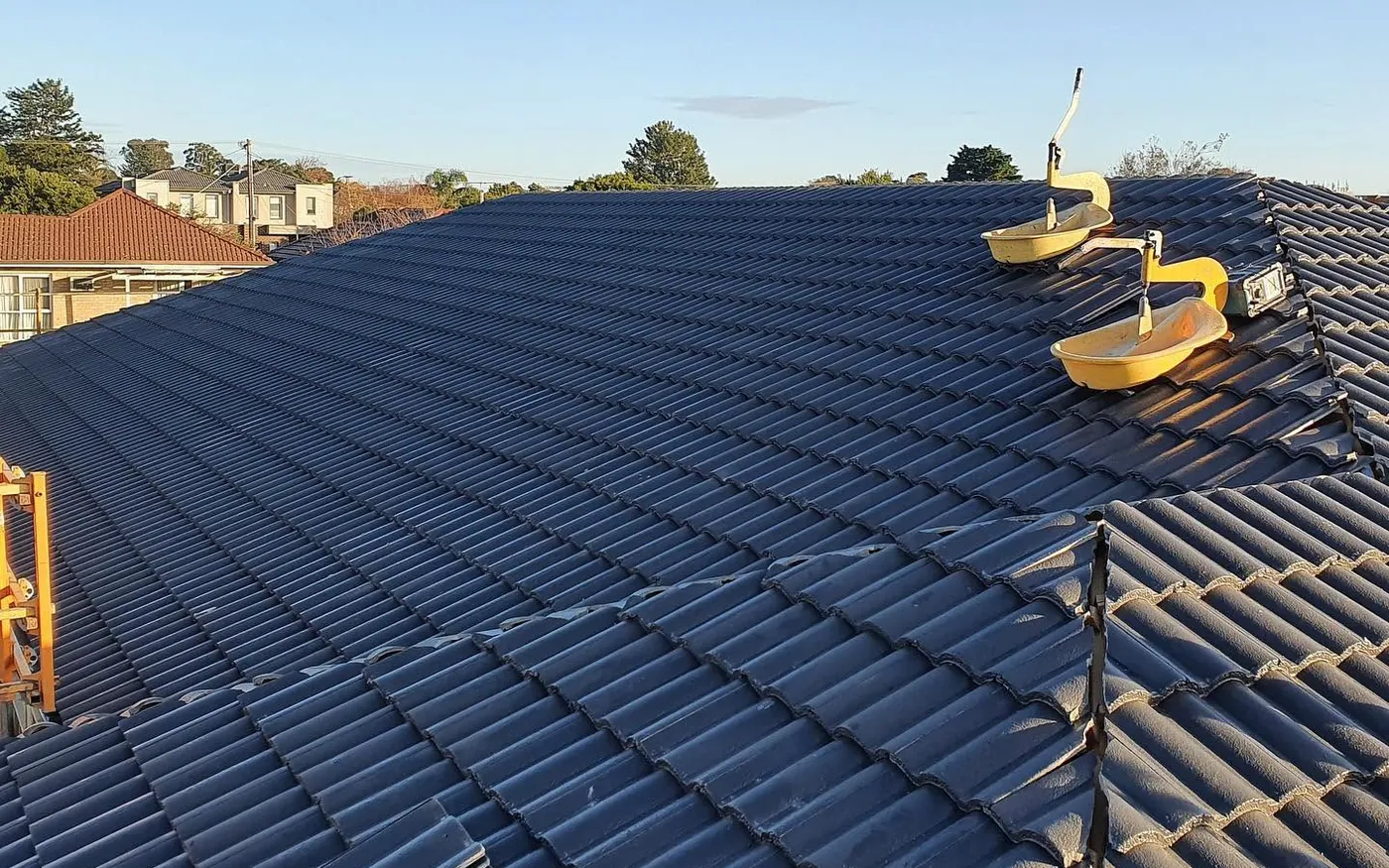
- The 2025 season brought giant hail to Caloundra and ex-Tropical Cyclone Alfred to the coast. Roofs that were already tired failed first.
- Check ridges, tiles, valleys, flashings and gutters before the wet, not after.
- Most of the checklist can be done from the ground with a pair of binoculars.
- Book repairs early. Storm season is when every roofer on the coast is flat out.
Why Sunshine Coast roofs cop it
The wet season here is not gentle. The Bureau of Meteorology records a mean annual rainfall of 1,492.6 mm at Sunshine Coast Airport, with February the wettest month at 217.5 mm. Up the range, Maleny gets 2,000.8 mm a year. That water arrives in bursts, often with wind and hail behind it.
Recent seasons have shown what that means. Ex-Tropical Cyclone Alfred crossed near Moreton and Bribie Island on 8 March 2025 as a category 1 system, with gusts around 120 km/h and more than 500,000 properties losing power. The Insurance Council of Australia counted 131,000 claims worth $1.61 billion. Then, by late November, south-east Queensland had seen 10 giant-hail warnings against a typical four, with Caloundra hit on 24 November 2025 and stones of 8 to 14 cm reported across the region.
Roofs are designed for this. The coast sits in wind Region B, with design winds of 162 to 198 km/h. But a design figure assumes the roof is in good order, and a local wind hazard study found older housing more vulnerable. This checklist is about closing that gap before the first storm.
Checklist part 1: from the ground
Start on the footpath with binoculars if you have them. You are looking for anything that has changed since last year.
- Ridge and hip lines. They should be straight. A wavy line, a gap under a cap or a cap that sits higher than its neighbours means the bedding has moved.
- Pointing. Cracks or missing chunks along the ridge line. Grey lumps in the gutter or on the ground are mortar that has fallen out.
- Tiles. Look for cracked, chipped or slipped tiles, and for any that sit up at an angle. Check below trees and where the aerial or solar cabling crosses the roof.
- Colour. Chalky, patchy or mossy areas mean the coating has gone and the tiles are holding water.
- Metal. Orange streaks below valleys, flashings or screw heads.
- Overhanging branches. Anything that could hit the roof or drop a load of leaves into a valley.
Then go inside. Look at every ceiling, especially under hips, valleys and around the chimney or vent pipes, for stains, sagging plaster or bubbling paint. On a sunny day, check the roof cavity for pinpricks of light. Any of these means water already has a way in, and storm rain will find it. Our roof health check walks you through the same questions.
Checklist part 2: gutters, valleys and downpipes
Most storm damage inside a house comes from water that could not get away. Gutters and valleys full of leaves back up, water rises over the back of the gutter or under the tile laps, and it ends up in the ceiling.
- Clear the gutters. Do it before the season and after every big blow. Check the outlets and downpipe heads, which block first.
- Check the valleys. Valley irons carry water from two roof faces and collect everything that lands on them. Leaves, tennis balls and mortar all end up here. A blocked valley overflows sideways under the tiles.
- Look at the valley metal. Rust holes in a valley iron leak straight into the cavity. Near the surf this is a common failure.
- Test the downpipes. Run a hose into the gutter and make sure every downpipe flows. A blocked downpipe fills the gutter in minutes in a heavy fall.
- Check gutter fixings and fall. Sagging sections hold water and pull away from the fascia.
Gutter problems are cheap to fix now and expensive later. Published Sunshine Coast guides put gutter replacement at $39 to $105 per metre, so a clean and a coat through our gutter and fascia painting service is the better deal while the metal is still sound.
Checklist part 3: ridges, tiles and flashings
These are the items that need someone on the roof, so this is where we come in. On an inspection we tap every ridge cap, check the pointing along every ridge and hip, and look at the tiles and flashings up close.
- Ridge caps. Cracked pointing is re-pointed with flexible compound; crumbled bedding means the caps are lifted and re-bedded. Loose caps are the first thing a gust takes. See ridge capping and re-pointing.
- Broken tiles. Each one is replaced with a matching tile. Hail can crack dozens on one face, so after a hail event this check matters most.
- Tile fixing. AS 2050:2018 covers mechanical fixing of tiles, and on older roofs the edge and ridge courses are often not clipped. We can fix them.
- Flashings. Lifted or corroded flashings around chimneys, vents and skylights are re-sealed or replaced.
- Sarking. Torn sarking near the eaves lets wind-driven rain through.
Anything found here is a normal roof repair. If the list is long and the coating has gone, it usually makes more sense to fold it into a full roof restoration so the roof goes into the season sealed as well as fixed.
What to do after a storm
First, stay off the roof. Wet tiles are slippery, and Workplace Health and Safety Queensland requires edge protection for anyone working where a fall of 3 m or more is possible or the slope is over 26 degrees. That rule exists because falls from house roofs hurt people. Look from the ground and from inside instead.
If water is coming in, put a bucket under it and, if you can reach it safely, poke a small hole in a bulging ceiling to let the water out before the plaster comes down. Photograph everything for your insurer. Then call us for a temporary make-safe if it is needed and a proper roof leak repair once the weather clears.
Be careful who you let on the roof after a big event. Storm chasers turn up after every hail season. Any roofing work over $3,300 must be done by a QBCC licensee, and the contractor pays the Queensland Home Warranty Scheme premium before starting. Ask for the licence number. Ours is 15424815. For minor leaks, published guides list $240 to $775, so get a written quote before anyone starts.
Book before the season, not during it
Once the first storms arrive, every roofer from Caloundra to Tewantin is booked out on leaks. Spring is when there is room in the calendar and the weather is dry enough for coating work. If your roof needs re-pointing, a few tiles or a full restoration, getting it done before November means the roof goes into the season sealed.
Coastal homes at Kings Beach, Mooloolaba and Coolum Beach take wind first, and salt has usually done some work on their valleys and flashings already. Hinterland homes around Maleny take the heaviest rain. Both have the same fix: sound ridges, sound valleys, clear gutters and a sealed surface.
Seaspray Restos inspects roofs across the whole coast, from the Caloundra region to Noosa and up into the hinterland. Our work carries a 10-year warranty (terms apply). Contact us before the season and we will start with a satellite look at your roof, then confirm what it needs on site.
Sources
- Bureau of Meteorology, Sunshine Coast Airport climate averages
- AIDR: ex-Tropical Cyclone Alfred, Queensland 2025
- Insurance Council of Australia catastrophe 252, ex-TC Alfred
- ABC News on south-east Queensland hailstorm frequency, 2025
- Greenline on AS/NZS 1170.2 wind regions
- Sunshine Coast wind hazard study
- WHSQ managing fall risks on roofs
- QBCC what work requires insurance

Questions
Storm season questions
When is storm season on the Sunshine Coast?
The wet months run through summer, and the Bureau of Meteorology records February as the wettest month at Sunshine Coast Airport with 217.5 mm on average. Hail tends to arrive earlier in the season and cyclonic weather later, as ex-Tropical Cyclone Alfred did in March 2025. Get roof work done in spring while the weather is dry.
Can I check my roof for storm damage myself?
You can do most of the checklist from the ground: ridge lines, pointing, cracked or slipped tiles, rust streaks, gutter condition and ceiling stains inside. Leave getting on the roof to us. Wet tiles are slippery and Queensland safety rules require edge protection where a fall of 3 m or more is possible.
What should I do if my roof leaks during a storm?
Catch the water, relieve a bulging ceiling if you can do it safely, and photograph the damage for your insurer. Stay off the roof. Call us for a make-safe if water is pouring in, then a proper repair once the weather clears. Only use a QBCC licensed contractor and get a written quote first.
Does hail damage tiled roofs?
Yes. Large hail cracks concrete and terracotta tiles, especially older, brittle ones, and dents metal roofs, gutters and flashings. The 2025 season produced stones of 8 to 14 cm in south-east Queensland and a direct hit on Caloundra. After a hail event, have the roof inspected even if nothing is leaking yet.
Free quote
Need a hand with your roof?
Send your address for a satellite estimate, or call Tyler.
0434 142 995- Satellite estimate within a business day
- 10-year warranty (terms apply)
- QBCC licensed, home warranty covered
- Australian-made coatings