
Coatings · Updated 30 September 2026 · 5 min read
Painting a Roof With a Rainwater Tank: What to Do Before and After
How to protect a rainwater tank when your roof is cleaned and coated: disconnecting downpipes, the first-flush rule, and which membranes are tank-safe.
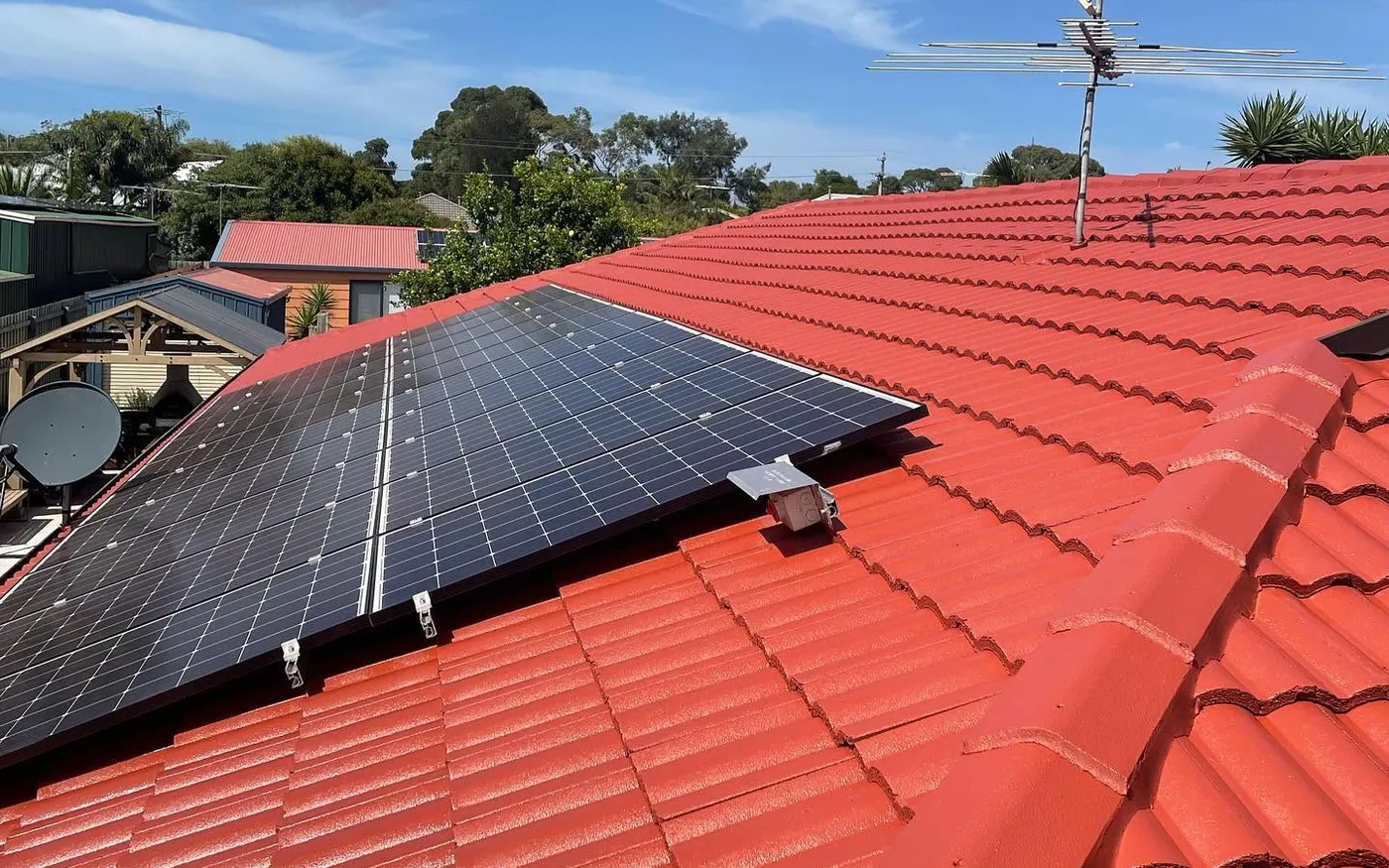
- Yes, a roof that feeds a tank can be restored and coated. The tank just needs to be taken offline for the job.
- Disconnect the downpipes before the pressure clean, not after.
- enHealth says do not collect from the first two to three rain events after painting.
- Industrial Roof Coatings Roof Protect is rated safe for rainwater collection after the first wash or rainfall.
Can you coat a roof that feeds a rainwater tank?
Yes. Plenty of Sunshine Coast homes, and most hinterland ones, drink or garden from the roof. That does not rule out a restoration. It changes the order of a few steps and adds a wait at the end, and that is all. The coating itself is the easy part: the membranes we use are water-based acrylics, and the manufacturer publishes what they are safe for.
Industrial Roof Coatings Roof Protect is a low-VOC water-based membrane and is rated safe for rainwater collection after the first wash or rainfall. It carries a 15-year manufacturer warranty when applied by an approved applicator as a primer plus two coats. That is the system we recommend on tank-fed roofs.
The national guidance is a little more cautious than the product sheet, and we follow the cautious version. The enHealth guidance on the use of rainwater tanks says not to collect water from the first two to three rain events after a roof is painted, and recommends a first-flush diverter on the downpipe. So the tank stays disconnected until a few good falls have washed the roof. Our roof painting and roof restoration pages cover the coating work itself.
Before the job: take the tank offline
Disconnect the tank before anyone gets on the roof. The first step is a pressure clean, and its run-off is the dirtiest water the roof will ever shed: lichen, moss, dirt, salt and the chalky remains of the old coating.
Here is what to do the day before we arrive:
- Divert every downpipe that feeds the tank. Swing the diverter to overflow, pull the flexible connector, or fit a temporary elbow so the water runs to the stormwater drain or the garden instead.
- Fill the tank first if you can. A full tank before the job means you are not short of water during the wait after it.
- Check the first-flush diverter. If you have one, empty it. If you do not, this is a good time to fit one, because enHealth recommends them for every tank.
- Cover the tank inlet screen so overspray stays off the mesh, and tell us where the tank and pump are.
If the roof has an old fibro or asbestos cement section, stop here. Pressure washing an asbestos roof is illegal in Queensland, with fines up to $10,000. We do not clean those roofs and will talk through what can be done instead.
During the job: cleaning, repairs and coating
With the tank offline, the work runs as normal. The pressure clean comes first, and we flush the gutters and downpipes so nothing sits in them. Then the repairs: cracked tiles replaced, rusted valley irons and flashings renewed, ridges re-bedded or re-pointed. Guide pricing for cleaning alone, from Cobbas, is $2.50 to $3.50 per square metre for pressure cleaning on the Sunshine Coast. On a tank-fed roof it is also worth checking the gutters closely, since rusted seams and standing water are where tank problems start. See gutter and fascia painting.
Coating goes on in three passes: primer, then two membrane coats by airless spray. Overspray is the thing to manage near a tank. We mask the tank inlet, keep the spray on the roof and clean the gutters again once the last coat has cured, so the first rain does not carry dried overspray into the downpipes.
All of this is standard for us. The one thing that differs on a tank roof is that we will ask you not to reconnect on the day we leave, even though the roof looks finished. The next section explains why. The full sequence is in our guide to the restoration process.
After the job: the first-flush wait
The membrane cures on the roof, and the first rain after that carries off anything loose on the surface: dust, dried overspray, a little of whatever cured on top. That water should go to the drain, not the tank. enHealth puts it at the first two to three rain events after painting, and we tell every customer to wait that long.
Two things make the wait shorter or longer. A light shower barely rinses the roof, so count real falls, not drizzle. And the Sunshine Coast gets plenty: the Bureau of Meteorology records 1,492.6 mm a year at the airport, so in summer the wait is usually short. In a dry spell you can hose the roof down to bring the first wash forward.
Once the roof has been rinsed, reconnect the downpipes, empty and reset the first-flush diverter, and check the inlet screen. Then the roof is a better water catcher than it was, because a sealed membrane sheds water cleanly and does not grow the lichen that a chalky tile does. The same applies to a coated Colorbond roof after a metal roof restoration.
Hinterland homes on tank water
Many tank-fed roofs are up the range. Maleny gets 2,000.8 mm of rain a year at 425 m, and Montville sits at around 400 m. That much rain and that much shade mean hinterland roofs grow moss and lichen faster than coastal ones, and tank owners notice it as a green tinge in the first flush and a build-up on the inlet screen.
A restoration helps twice over. It removes the growth and seals the surface so it grows back slower, and it fixes the cracked pointing and rusted valleys that let fine debris into the gutter and on to the tank. The same applies in Maleny, Montville, Palmwoods and Yandina, and on acreage around Bli Bli and Tewantin.
Access is the other hinterland issue. Steep blocks and two-storey pole homes mean edge protection under the Workplace Health and Safety Queensland rules, which apply where a fall of 3 m or more is possible or the slope is over 26 degrees. We plan that in the quote. Our hinterland roof restoration page has more.
Choosing the coating and the warranty
For a tank-fed roof, the coating choice starts with the manufacturer’s rainwater rating. Roof Protect states it is safe for rainwater collection after the first wash or rainfall, covers roughly 6 square metres per litre and carries a 15-year warranty. The 20 Year Roof Protect system adds a Platinum Primer on concrete tiles for a 20-year warranty, and Roof Refresh is the 10-year option. All of them need an approved applicator for the warranty to stand. A heat-reflective version is available too; see our guide on heat-reflective coatings.
Whichever tier you pick, the rule after the job is the same: wait the two to three rain events, then reconnect. We put that in writing with the job record, along with the product used and its warranty tier. Our own workmanship carries a 10-year warranty (terms apply), and Seaspray Restos is QBCC licensed (lic. 15424815).
If your roof feeds a tank, tell us when you ask for a quote so we can plan the disconnection and the timing around the forecast. Start with the cost calculator or contact us for a satellite estimate.
Sources
- Industrial Roof Coatings Roof Protect
- enHealth guidance on the use of rainwater tanks
- Asbestos Queensland: cleaning asbestos cement roofs
- Cobbas roof cleaning cost guide
- Bureau of Meteorology, Sunshine Coast Airport climate averages
- Maleny, Queensland
- WHSQ managing fall risks on roofs
- Industrial Roof Coatings 20 Year Roof Protect

Questions
Rainwater tank questions
Is roof paint safe for drinking water from a rainwater tank?
The membrane we use on tank-fed roofs, Industrial Roof Coatings Roof Protect, is a low-VOC water-based product that the manufacturer rates safe for rainwater collection after the first wash or rainfall. We still follow the enHealth guidance and ask you to keep the tank disconnected for the first two to three rain events.
How long after painting a roof can I reconnect my rainwater tank?
After the first two to three real rain events, per enHealth guidance. Light drizzle does not count, so wait for proper falls. In a dry spell you can hose the roof down to bring the first wash forward. Then reconnect the downpipes, empty the first-flush diverter and check the inlet screen.
Do I need to disconnect the tank before the roof is pressure cleaned?
Yes, and before, not after. The pressure clean run-off carries lichen, dirt, salt and old coating residue, and it is the dirtiest water the roof will ever shed. Divert every downpipe that feeds the tank the day before we arrive, and fill the tank first if you can so you are not short during the wait.
Free quote
Need a hand with your roof?
Send your address for a satellite estimate, or call Tyler.
0434 142 995- Satellite estimate within a business day
- 10-year warranty (terms apply)
- QBCC licensed, home warranty covered
- Australian-made coatings