
Coatings · Updated 30 September 2026 · 5 min read
Heat-Reflective Roof Coatings in Queensland: What They Do and What to Expect
How heat-reflective roof membranes work on Queensland homes, what manufacturers claim, why colour matters, how the coating goes on and what it costs.
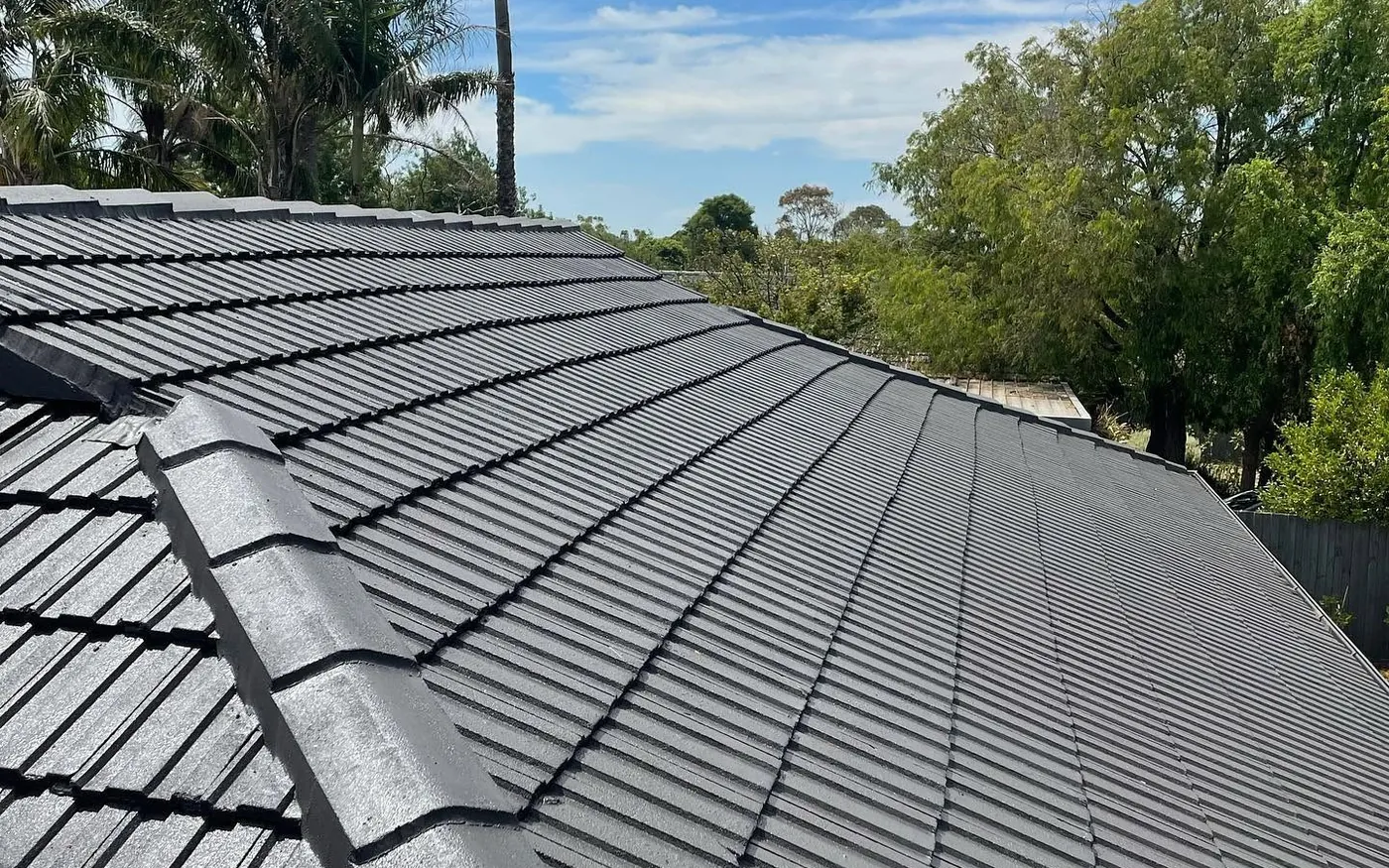
- A heat-reflective membrane bounces more of the sun’s energy off the roof surface, so the roof runs cooler than a dark, chalky one.
- Colour still matters. A light heat-reflective coating reflects more than a dark one.
- Nobody can promise a fixed number of degrees inside. Insulation, ventilation and roof colour all play a part.
- It is applied as part of a normal restoration: clean, repair, primer, two coats.
What a heat-reflective coating is
A standard roof membrane is a thick, flexible acrylic that seals the roof and carries the colour. A heat-reflective membrane does the same job with pigments chosen to reflect more of the sun’s energy, including the infrared part you cannot see, instead of absorbing it. Less energy absorbed means a cooler roof surface, less heat radiating into the roof cavity and less work for the ceiling insulation and the air conditioner.
The systems we use come from Industrial Roof Coatings, an Australian manufacturer based at Varsity Lakes. Their Thermal HRC is the heat-reflective option and carries a 15-year manufacturer warranty when applied by an approved applicator. For comparison, Dulux says its AcraTex Cool Roof reflects up to 90% of the sun’s total light energy, which shows what the category is designed to do.
What it is not is a miracle. A reflective roof will not turn an uninsulated Queenslander into a cool room, and anyone quoting you an exact number of degrees cooler for your house is guessing. What it does is take one heat source off the top of the house, and on a dark roof that was soaking up the sun the difference is real. It is offered through our roof painting service and as the coating stage of a full roof restoration.
What to expect, and what not to
Queensland sun is the reason the category exists. The Bureau of Meteorology records a mean January maximum of 29.1 degrees at Sunshine Coast Airport, and roof surfaces in that sun run far hotter than the air. A reflective membrane brings the surface temperature down, and the roof cavity follows.
How much of that reaches the rooms below depends on the rest of the house:
- Ceiling insulation. A well-insulated ceiling already blocks most roof heat, so the gain from a cooler roof is smaller. A poorly insulated or uninsulated ceiling gets the most benefit.
- Roof cavity ventilation. Whirlybirds and eave vents move hot air out; a sealed cavity holds it.
- Roof colour and condition before the job. Going from a dark, chalky roof to a light reflective one is a bigger change than from a mid-grey to the same product.
- Orientation and shade. A west-facing roof face with no shade takes the afternoon sun; a shaded roof gains less.
We will not put a percentage or a number of degrees on it for your home, because Industrial Roof Coatings does not publish one and the true answer depends on the points above. What we can say is that the roof surface will absorb less and reflect more, and that this is the direction cool-roof work in Australia is heading.
Colour matters more than people think
Reflective pigments help, but colour is still the biggest lever. A white or pale roof reflects more sunlight than a dark one no matter what is in the paint, and a heat-reflective dark colour reflects less than a standard light one. That is why the two colours we are asked for most, Surf Mist and Monument, sit at opposite ends of the scale. Surf Mist is a pale off-white and reflects the most. Monument is a deep charcoal, popular because it suits modern homes, and it is the colour where a reflective formulation does the most work relative to a standard membrane.
Some things push people toward dark colours: a dark render, a charcoal Colorbond fence, body corporate rules in an estate such as Peregian Springs or Baringa that set an approved palette. If you want a dark roof, a reflective membrane is the way to have it and still take some heat off. If you have a free choice and a hot house, go lighter.
Glare is worth a thought too. A pale roof on a two-storey home above a neighbour can throw light into their windows, and in Buderim, where houses look down on each other from the plateau, a mid-tone is often the neighbourly pick. We can show colour samples on the roof before the job.
How it is applied
A heat-reflective coating is applied the same way as any other membrane, and the prep matters more than the product. The steps are:
- Pressure clean. Lichen, moss, dirt, salt and chalk all come off. Coating over chalk is coating over dust.
- Repairs and re-pointing. Cracked tiles are replaced, rusted valleys and flashings renewed, ridges re-bedded or re-pointed. See ridge capping and re-pointing.
- Primer or sealer. Bonds to the tile or metal and locks down the surface.
- Two membrane coats. Applied by airless spray to build the full film thickness the warranty requires.
The coverage rates published by the manufacturer show why two coats matter. Roof Protect covers roughly 6 square metres per litre as a primer plus two coats and is a low-VOC water-based membrane; Roof Refresh covers roughly 4 square metres per litre. Thin coats reflect less and fail sooner. Every IRC warranty depends on an approved applicator, which is the point of using one. The full sequence is in our guide to the restoration process.
What it costs
A heat-reflective membrane is priced like any roof coating, with the product cost a small part of the total. The whatsthedamage Sunshine Coast guide lists roof painting on a single-storey home at $2,425 low, $3,875 typical and $5,800 high, and a full tile roof restoration, which includes the repairs, at $3,875 to $10,650. Canstar gives $28 to $38 per square metre for small roofs, $22 to $28 for medium and $17 to $22 for large.
| Job | Low | Typical | High |
|---|---|---|---|
| Roof painting, single storey | $2,425 | $3,875 | $5,800 |
| Tile roof restoration | $3,875 | $6,300 | $10,650 |
| Metal roof restoration | $2,900 | $4,075 | $5,800 |
These are guide ranges only. The difference between a standard and a reflective membrane is a line in the quote, not a different job. What moves the total is roof area, pitch, how many tiles and ridges need work and whether solar panels come off. Try the cost calculator, then ask for a satellite estimate. Our cost guide has the rest of the figures.
Which Sunshine Coast homes gain the most
The homes that notice a reflective roof most are the ones with the least between the roof and the room. Older brick-and-tile homes with thin or patchy ceiling insulation, dark concrete tiles that have gone chalky, and big west-facing roof faces are the best candidates. Homes with a dark Colorbond roof over a low ceiling also do well through our metal roof restoration service.
On the coast that describes a lot of houses: older beach homes in Golden Beach and Currimundi, brick-and-tile streets in Nambour, and hinterland homes that take the full afternoon sun. Newer estates with thick insulation and light Colorbond gain less, though the coating still seals and protects the roof.
If you are already restoring the roof, adding a reflective membrane is a small decision with a long life. The coating comes with a 15-year manufacturer warranty through an approved applicator, and our workmanship carries a 10-year warranty (terms apply). Contact us and we will start with a satellite look at your roof and talk colour on site.
Sources
- Industrial Roof Coatings Thermal HRC
- Dulux AcraTex Cool Roof residential
- Bureau of Meteorology, Sunshine Coast Airport climate averages
- Industrial Roof Coatings Roof Protect
- Industrial Roof Coatings Roof Refresh
- Industrial Roof Coatings
- whatsthedamage roofing cost guide, Sunshine Coast
- Canstar roof restoration cost guide

Questions
Heat-reflective coating questions
How much cooler will a heat-reflective roof make my house?
We do not put a number on it, because the manufacturer does not publish one and the result depends on your ceiling insulation, roof cavity ventilation, roof colour and orientation. The roof surface will absorb less sun and the cavity will run cooler. Homes with thin insulation and dark roofs notice it most.
Does a heat-reflective coating work in a dark colour?
It works, but a light colour still reflects more. Reflective pigments let a dark colour such as Monument bounce back more energy than a standard dark membrane, which is where the product does the most relative good. If you have a free choice and a hot house, a paler colour such as Surf Mist reflects the most.
How long does a heat-reflective roof coating last?
Industrial Roof Coatings covers its Thermal HRC heat-reflective membrane with a 15-year manufacturer warranty when applied by an approved applicator as a primer and two coats. Canstar puts roof restorations in general at approximately 15 to 20 years. Our workmanship carries a 10-year warranty (terms apply) on top of that.
Can I put a heat-reflective coating on a metal roof?
Yes. Colorbond and galvanised roofs take a membrane well once they are cleaned and any surface rust is treated and primed. A dark metal roof over a low ceiling is one of the better candidates for a reflective coating. Rusted-through sheets cannot be coated and need replacing first.
Free quote
Need a hand with your roof?
Send your address for a satellite estimate, or call Tyler.
0434 142 995- Satellite estimate within a business day
- 10-year warranty (terms apply)
- QBCC licensed, home warranty covered
- Australian-made coatings